Monday, January 10, 2011

Genesis Game Reviews: Ghostbusters

Who you gonna call? ...HE-MAN!

Ghostbusters was arguably the most successful entertainment franchise of the 1980's. The original 1984 film starring legendary funnymen Dan Aykroyd, Bill Murray and Harold Ramis directed by Ivan Reitman was the perfect storm of action, comedy and romance with a unique and memorable concept that instantly became a permanent fixture of American pop-culture.

For those who don't know about the Ghostbusters — all three of you who have just recently given up your old order Amish lifestyle to join the rest of us in the modern world — the story was about a group of parapsychologists who lost their university jobs due to their research into the supernatural being viewed by their peers as a ridiculous waste of money. It didn't help that Murray's character Peter Venkman was a sleazeball using his career to take advantage of female students. Out on their rear-ends and needing to make cash the three discover a real live... er... dead ghost at the New York public library and hit upon a brilliant idea to make money: charging people to remove malevolent spirits from their homes and businesses, becoming some kind of insane supernatural cross between firefighters and exterminators.

The Ghostbusters are fine too I guess.

After hiring a fourth Ghostbuster by the name of Winston Zeddemore played by Ernie Hudson, the Ghostbusters discover that the recent surge in ghostly activity isn't just good for business, but a threat to the entire planet when an ancient Sumerian god named Gozer is summoned to our plane of existence. As the only ones with the necessary equipment and know-how the team is forced to battle this primordial force and save the world.

The mega-hit movie led to the creation of a cartoon series that lasted well into the early 90's and an often maligned but decent sequel in 1989. The cartoon also spawned a vast toy-line that practically printed its own money. Ask anybody who was a child in the 80's and very early 90's, Ghostbusters was huge, almost Pokemon huge.

No Winston? Racism or laziness? You decide.

For some reason this success never translated into video games which is a shame because the source material has all the makings of a great game. Given its popularity, Ghostbusters games were quickly released for almost every video game platform imaginable and ranged from barely playable to legendarily bad in the case of both Ghostbusters and Ghostbusters 2 on the NES. To add insult to injury one of the only halfway decent Ghostbusters games to be released was New Ghostbusters 2 by Hal Laboratories, the developer famous for the Kirby and Super Smash Brothers franchises, was only available in Europe and Japan. North America did get the Gameboy version but it wasn't nearly as good as its NES brother. Ghostbusters fans would have to wait until 2009 for the original writers and actors to return to help craft Ghostbusters the Video Game for all current consoles which finally contained good gameplay in most versions accompanied by great writing, acting and a canonical story that was spiritually Ghostbusters 3.

Here and there. Very scientific observation, Egon.

This brings us to our review for this installment of Sega Scrutiny which is, you guessed it, Ghostbusters for the Sega Genesis both developed and published by Sega themselves.

The Sega Ghostbusters is an oddity first and foremost because it doesn't completely suck and secondly because the game follows its own original story taking place sometime between the first and second movie. Most other Ghostbusters games attempted to just shoehorn in the movie storyline. It was released in 1990 which was not to its benefit as Ghostbusters was on the decline after the lackluster second film. The cartoon was still trucking along but that too was suffering from worsening quality. The franchise was beginning to implode in terms of popularity. The game also battled consumer distrust. Since other Ghostbusters games were monumental flops people weren't exactly running out to buy this one. All of these reasons helped the game fall into relative obscurity.

Evil tablecloth representing the cheapest of Halloween costumes.

The storyline isn't necessarily a good one but at the very least it sets the stage for your adventure. After defeating Gozer the Gozerian in the original movie the Ghostbusters basically put themselves out of business. Supernatural activity around New York City was suddenly non-existent. This suddenly changed as mysterious earthquakes began to occur along with new hauntings for the Ghostbusters to investigate. The mystery deepens with the discovery of ancient puzzle pieces that the boys in gray must hunt down and combine in the hope of discovering the underlying cause of the disturbances.

This game can get downright weird.

The writing is pretty poor and badly presented since the game doesn't care which Ghostbuster you choose. Since the dialog remains the same no matter what you'll get some strange out-of-character lines such as Egon saying, "We've got money, let's party!" which is something Ghostbusters fans will find odd coming from the emotionless scientist we know and love. There are a lot of other tidbits that won't make muchsense to people familiar with the franchise like needing to buy equipment from this random scientist guy. The iconic Stay Puft Marshmallow Man also makes a welcome and obligatory appearance as a boss character though it makes little sense from a story perspective. They've already defeated Gozer (Stay Puft) and nobody makes any mention of his return. You can ignore these elements and their lack of adherence to the source material easily enough but they're still irksome. For the most part the story is just there to move the game forward and nothing else. Don't expect anything near the caliber of the films.

Way to shed your scales and leave yourself open to attack, moron.

Another issue where the story is involved is something that a lot of Ghostbusters games have screwed up. There's no Winston. Winston was an integral character to the films. He was the outsider that didn't have a PhD and gave us the common man's perspective of what was going on. He wasn't one of the original Ghostbusters and was hired later in the first movie but this game takes place after the movie so where is he? For some reason game developers just didn't like Winston. Was it because he was black? That may be an unfair assumption to make but the fact remains that he's not here or in many other old Ghostbusters games and the absence is annoying.

Come on, come on!

Don't look directly into the trap!

That wasn't such a chore now was it?

The graphics are nothing stellar but there's nothing terrible here either. The first thing you'll likely notice are the character sprites which have gotten a lot of criticism for displaying our heroes with giant heads and tiny bodies. The obvious reason this was done is to capture the facial likenesses of the characters without making the sprite so large that it would impede gameplay. It actually sort of works for me by giving the game a fun and cartoony feel. Your Ghostbuster will make a shocked expression when they're hit and knocked back in slapstick fashion. The goofy look may take some getting used to and is one of the aspects of this game that you'll either enjoy or loathe depending on personal taste.

Sega had a brief but unsuccessful stint in the newspaper business.

The level graphics are unfortunately mundane. While they do their job of portraying different environments you basically get your generic fire level, ice level and so on. The backgrounds are static and don't really take advantage of things like the parallax and animation that the Genesis was capable of. Even by 1990 standards the eye-candy is kept to a minimum. The weapon graphics get the job done with the most visually impressive being the Ghostbusters' famous capture stream but you'll never find yourself going, "wow that was awesome!"

Collect the puzzle pieces and open up the final levels, blah blah.

One place where the graphics department didn't slouch is the bosses. The boss and middle boss monsters have a lot of visually unique designs that range from cool looking to really, really weird. Some people don't really like how odd some of the bosses and minor enemies are in this game but I found the strange enemies fitting for the Ghostbusters universe, especially when you factor in the Real Ghostbusters cartoon series which has a lot of creatures far more absurd than anything represented in this game.

Chinese restaurant/fireworks store/night vision goggle store?

Why am I buying equipment from a mad scientist fanboy again?

At its core the gameplay is that of a standard platformer. You run, you jump and you shoot. This basic model is actually a good thing since earlier attempts at Ghostbusters games often had complex and confusing elements that contributed to their unplayable natures. Another plus is that the controls are responsive and fun. There aren't really any sudden death pitfalls and the jumping puzzles aren't frustrating or very difficult. The fun of simply controlling your character is make-or-break for this type of game and I feel Ghostbusters performs admirably here.

It wouldn't be a platformer without an ice stage.

You start by choosing one of the three Ghostbusters available: Egon Spengler, Peter Venkman or Ray Stantz. Egon is the fastest but has the least vitality while Ray is the slowest but can take the most punishment. Peter is predictably a balance of the two. While it really doesn't matter which Ghostbuster you choose I've found Ray to be the easiest since speed isn't a major factor and it takes a lot to kill him.

A snowman shouldn't threaten a guy...

...with an unlicensed nuclear accelerator on his back.

Between each mission the Ghostbusters discuss current events in their firehouse headquarters and you have a choice of proceeding to the city map where you head to the next level or visiting one of the shops. Although you can choose what level you want to go to out of the first four levels in Mega Man style it works best to just do them in the order given to you. The first shop is an item shop run by a Chinese man who sells you Chinese food like a Peking duck that restores your health, screen clearing bombs that effect ghosts for some reason and night vision goggles which are all but required to beat the fire level. It's a pretty strange combination that's not worth questioning. The other shop is a weapon shop where you can upgrade your Ghostbuster with more powerful blasters, protective shielding and energy tank upgrades to give yourself more ammo for your special weapons. Why you have to go to a store and buy anti-ghost weapons is beyond me since Egon is supposed to have invented them.

Why didn't you just call the fire department?

I see. Nevermind.

Only a few of the special weapons are particularly useful unfortunately. There's a three-way spread shot that will all but replace your primary weapon since it doesn't use much energy and a bubble gun that traps ghosts and floats them off the screen, very useful for the few enemies in the game that are invincible to your normal attacks. Other weapons include a slow but very powerful single shot gun and an explosive shot with an area-effect that's good for groupings of enemies but uses a lot of your energy.

This is for ruining the cartoon you little slime-ball!.

Speaking of the weapons this is another complaint that the game gets. You don't often actually catch ghosts like in the movies and cartoon. You use your arsenal to outright destroy most ghosts. A few ghosts take only a shot or two to kill but there's also annoying enemies like supernaturally floating dishware that take a lot of shots to destroy for no obvious reason. This problem is alleviated by purchasing some of the other weapons but I still have some issues with the enemy balancing decisions.

Oh snap.

Fortunately it's not all spiritual annihilation and you do get to capture some ghosts with your trusty proton stream and ghost trap just like in the movies. Each level has a number of "middle ghosts" you must defeat, essentially middle bosses, before you can move on to the final boss. The middle bosses are the only enemies you need to capture but first you have to beat the tar out of them. After they're defeated they'll be reduced to a little green spirit which you must reel in with your capture stream in a little tug-of-war mini-game. Once you get the ghost close enough to the trap it will automatically trigger and suck the ghoul in. The capture mini-game is a bit awkward and sometimes difficult because the ghost can leave the screen and escape. Occasionally this will happen without even giving you a chance to capture the ghost depending on where the middle ghost is on the screen when you defeat it. You only get paid for defeating the middle ghosts if you actually capture them and since money is important for buying new items this can be extremely frustrating until you manage to master ghost wrangling.

It's not a proper retro game if it doesn't have a centipede boss.

The game also allows you to grind for money if you need to, sort of, by placing safes in the levels. You blow up the safes to see what's inside and it will either randomly be a bomb that will blow up and hurt you or a bag of money. You can leave the level by returning to the beginning and exiting which resets the safes so you can try your luck again. You also get a small amount of money for defeating regular enemies. If you're patient you can fully arm your Ghostbuster at the very beginning of the game.

Mike Tyson's Punch Out: Extreme Edition.

The game's difficulty is low but it's not mindlessly simple. The bosses are interesting and rough at first but they all have conquerable attack patterns that most experienced gamers will master quickly. The game is also short with only six levels though the difficulty understandably heightens in the last two. It shouldn't take the average person very long to get through the entire game and while extra lives are rare you're given plenty of continues should you need them. Regaining health is done by either leaving the level and visiting the item shop or using the Peking duck. You can also find health and energy restoring balls by destroying the famous and recognizable ghost "Slimer" of cartoon and movie fame. Slimers will show up in predetermined locations but they're few and far between.

It's not that impressive now but it blew me away when I was eight years old.

The game's sound isn't drop-dead incredible but it's actually fairly good. Given that this is a Sega developed game I would expect no less. The 16-bit mix of the famous Ghostbusters theme song by Ray Parker Jr. is presented acceptably and the rest of the level tunes are catchy and memorable. Some of the sound effects are unique but most of them will be familiar to you since it was common for Sega to re-use sound effects in order to save time and money. This seems especially true with earlier Genesis games.

Way too much Coppertone Kid's sunblock, Egon.

Ghostbusters
for the Genesis isn't going to be mistaken for one of the greatest games ever made but compared with other Ghostbusters games of the time it stood far above the competition. It's a serviceable platformer that fans of the genre and fans of the franchise will no doubt enjoy. Despite some strange design choices and unnecessary liberties taken with the source material it still lives up to its Ghostbusters namesake and is well worth your time. Except for New Ghostbusters 2 and the modern games there's really no other Ghostbusters title you can say that about.

Bustin' makes me feel good and so does this frequently overlooked game.

Let's show this prehistoric bitch how we do things downtown!

Scoring:

Presentation: 6 A passable story but the weird dialogue hurts the game in the presentation department as well as a laissez faire approach to the source material. Still, it looks and feels like a Ghostbusters game which is more than I can say for the NES original among others. While I find the character designs to be endearing others might find them a tad strange.

Gameplay: 8 It's a very basic platformer but tight control and fun bosses save it from total mediocrity. Some parts need work like the ghost catching sequence and the game is both short and easy but they were probably hoping to target a younger audience so these things are forgivable. I think it would have gotten boring if it were to drag on any longer anyway.

Graphics: 6 A lot more could have been done here. The backgrounds are plain, static and repetitive and your repertoire of weapons is uninspired and not nearly as flashy as the Ghostbusters' high-tech arsenal should have/could have been. There are some cool looking parts, especially the bosses, but in general nothing here really stands out.

Sound: 7 Filled with catchy but somewhat repetitive songs and good sound effects that are mostly reused from other Sega titles not that there's anything wrong with that. It was standard practice back then.

Lasting Appeal: 5 This really depends on if you're a Ghostbusters fan or not. If you are you might want to bump this up a few points. For everybody else this is a fun platformer that you'll beat once and probably not see any reason to revisit.

Overall Average: 6.4/10

Recommendations:

Collector: As one of the best Ghostbusters games out there and the fact that it's getting harder and harder to find, this obscure title is highly collectible. Despite flopping when it was released it's a very desired title today. James Rolfe the Angry Video Game Nerd may have had something to do with that. Expect to pay more than you usually would for Genesis games if you're looking to buy this one.

Gamer: If you like platforming games then fire up your emulator and give it a shot. If you like Ghostbusters then what are you waiting for? If you're not a fan of either of these things Sega's Ghostbusters probably won't change that.

Friday, January 7, 2011

Genesis Game Reviews: Target Earth

What is this crap? RoboCop's ugly brother SpaceCop?

Our subject today, Target Earth, has a bit of history to go along with it. If you've read my previous posts and you're still here then you know how I like to ramble on about that sort of thing. Prepare yourselves because it's going to be a long one.

First of all, what is Target Earth? It's one of the many hidden gems on the Genesis that you may have never heard of. There's a few reasons for that and we'll get into them shortly. Target Earth is essentially a run-and-gun game but unlike the Contra series you're piloting a giant robot. On the screen it isn't very giant but you get the idea. The design is very similar to a mobile suit from the Gundam franchise. Because of this the controls are a little slower and clunky to give you the impression that you're commanding a lumbering mech instead of a limber commando.

Target Earth was originally called Assault Suit Leynos in Japan and the Gundam and Macross similarities permeate this game in both style and story and they're obviously very intentional. In 1990 when this game was released these super popular anime franchises were screaming for video game translations yet they had only seen very mediocre games so far. With Assault Suit Leynos the people at NCS/Masaya set out to rectify that and even though they didn't have the Mobile Suit Gundam license Assault Suit Leynos was everything that a Gundam action game should be.

That's more like it.

Leynos became the first in what would become the Assault Suits series which continued on in the form of a prequel on the Super Famicom called Assault Suits Valken and made it to the States heavily edited as Cybernator. Since both Target Earth and Cybernator had their names changed, their stories slashed and were distributed by two different publishers, few people in the west put two-and-two together and realized they were related.

The Empire repainted its Star Destroyers a lovely shade of green.

Cybernator ended up with somewhat of a cult following as one of the best action games on the SNES. A fan translation of the original Assault Suits Valken ROM restored its excellent story to its former glory for English speakers. Target Earth on the other hand has stayed more obscure.

Considering the game launched it's own sub-genre of mecha shooter that includes the Japanese title Front Mission Gun Hazard, the much beloved Metal Warriors, the obscure PC game Iron Blood and dozens of other Assault Suits clones on varying platforms either professionally made or home-brew designed it seems a little unfair. Target Earth tends to only remain popular among Genesis fans who are in-the-know.

You're going down, Jupiter.

Part of the reason for its failed popularity in the US is the fact that its publisher was a company called DreamWorks. Don't worry, they have no relation to the movie studio you might be thinking of or even the video game company by the same name that was eaten up by Electronic Arts. It was one of many publishers that grabbed Japanese games and released them in the west as a way of making money. There's still a lot of publishing houses around today that do this even though more and more developers have become self-published. The only problem is that DreamWorks was bad at it and it didn't take long for them to go under and barely remain a footnote in the history of gaming. I tried my best to find out more about them for this review and I failed miserably.

Don't mess with the boys from Ganymede.

DreamWorks screwed things up immediately with a mistake that was far too common back then, releasing Target Earth with absolutely terrible box art. On top of that the cartridge had a boring white sticker that displayed the Target Earth logo and nothing else. The Americanized anime amalgamation Robotech which included the much acclaimed Super Dimension Fortress Macross was still popular at the time so why they chose to forgo the anime inspired robot cover that reflected the in-game art is beyond me. Associating it with Robotech would have only helped in the same way the game associated itself in Japan with Gundam and Macross. Instead we got this weird guy who looked like a badly drawn dollar store version of RoboCop.

Random surprise attacks sure do ruin a weekend.

It was released in 1990 so it was one of the earlier Genesis games but in an era before the Internet had spread to every household and people made their purchases based on browsing store shelves it's no wonder everyone passed this game up for more familiar, better looking and better marketed titles. Something that also may have helped or hurt the game was that the little bit of word of mouth it did generate had this to say: The game was hard.

Sir, yes sir!

Not as easy as it sounded, sir.

Before we discuss its legendary difficulty let's introduce the storyline and how DreamWorks altered it. A grossly simplified version of the original Assault Suit Leynos story goes something like this, please forgive me if I'm butchering things since the story has never been translated.

10-years before Leynos takes place the Earth went through its 4th World War between the Pacific Rim United States and the European Union Asia over control of the dwindling supply of fossil fuels and other resources. This battle is detailed in the prequel Assault Suits Valken.

At the end of Valken a distress signal from a "space probe team" expeditionary force, which was presumably sent out to discover new resource supplies, is received. The message is kind of garbled and everyone was too busy fighting and/or recovering from the war so the message goes unanswered and no rescue is sent out. They're forgotten and left to their own devices.

Here the plot takes a turn similar to the Battletech series of table top games and novels (the inspiration for Mechwarrior) where the Star League military leaves for deep space only to develop a new and different culture while building up a military of cloned super soldiers to one day return and re-take Earth for themselves.

In Leynos the antagonists are also a force of cloned soldiers, though the cloning was done out of the necessity, since they probably didn't have enough people to populate a new civilization, and not necessarily to build bigger and badder warriors like the clans of Battletech.

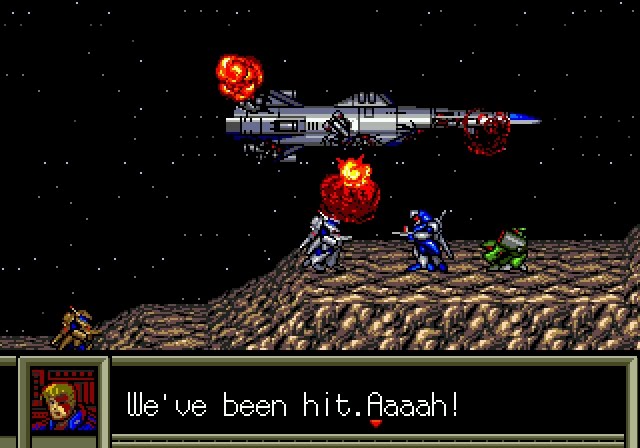
Cool! Backup from an allied space-cruiser!

Oh...

NNNOOOOO! He was my best friend!

Royally pissed off at the people who had left them abandoned and alone without so much as a "sorry", the impressively built-up armed forces of these ex-space explorers and their army of clone troopers set out for revenge and invade an unsuspecting Earth and her colonies.

The world has done some cleaning up since Valken though not everything is completely copacetic as further conflict occurs in the strategy game Valken 2 during the development of the Leynos Assault Suit. The Outer Planet Treaty Organization army is formed to make sure no one country can seize a monopoly on precious resources again and generally keep the peace. You, the player, are part of this force and the leader of an assault suit team stationed on a resource collection station on Ganymede, one of Jupiter's moons. Thanks to this you were spared from the initial attack on Earth. It doesn't take long for for the war to reach you however and the game begins as you scramble to defend and escape a besieged Ganymede to join the effort to retake the planet and repel the invading force. Along the way you discover just who these mysterious invaders are and what their beef is.

Get that bastard for what he did to our buddy!

If it sounds familiar, yes this is basically the plot to quite a few Japanese mecha shows. Space people versus Earth people is a common theme. It still works wonderfully in a game that was surprisingly plot heavy for the action genre in 1990 and sets the stage for an epic robot war.

The US version is slightly disinfected but not nearly as bad as I've heard some purists scream. The basic story is still intact though some random bits of violence (like an ally burning to death in the Earth's atmosphere) and romance are removed. The general plot remains the same except in this version your enemy is a force of mysterious cyborgs called the Chron. Like in Leynos the Chron are survivors from a space expedition sent out one-hundred years prior. Perceiving that they were abandoned and unwanted by the human race this misunderstanding lead them to plot revenge and invade Earth and her colonies. They also planned on improving the human race by turning everybody into Cyborgs like them. Essentially you're not missing a whole lot due to the translation except for the links to the rest of the Assault Suits games, a bit of character development and an exploding ally.

Get to the shuttle!

I never felt the changes were too bad and since I used to not know anything about Assault Suit Leynos I remember the Target Earth story as being impressively fleshed out for the time. Even though the changes were probably made in the English version to de-humanize your enemy you still feel pretty bad for the Chron, maybe since they were originally just innocent explorers. Even though some of the lines in Target Earth border on the realm of campy the story is still developed and enjoyable. As the story progressed I got the impression that the Chron weren't outright evil. Some, not all of them, became cyborgs to survive the harshness of space and truly believed that they were banished from society. What's odd is the story you get on the box and in the manual which basically make the Chron out to be a Borg-like threat that plans to assimilate all humans doesn't completely transfer into the game and your enemies are actually pretty human. You'll also witness allies die and your pilot will even question the reasons for fighting and mourn the loss of a defeated enemy. This stuff is pretty heavy.

This is Rex in Leynos 01, launching!

With all of that out of the way let's start digging into the game with its graphics. The opening scenes are absolutely excellent with giant space battlecruisers and hordes of attacking robots. It introduces the story and the conflict, ending with the enemy flagship approaching your home on Ganymede with Jupiter looking nice and colorful in the background.

The game itself isn't impressive at first glance. The small sprites give it the feel of an 8-bit game although the depth of color and the attention to detail is far superior to anything from the older generation. Things like kicking up dust with your feet or your jet-pack and the subtle effects that some of your weapons give off like an interesting, but mostly useless, shrapnel gun show that a lot of work was put into the art. When you get close to the Earth's atmosphere in one mission your assault suit starts to burn up which really impressed me the first time I saw it. These touches might not wow you but they add a lot of depth that make the game feel more alive.

I'll protect you... oh crap.

The screen is always busy and not just with enemies but allies that fight alongside you. Even though they're pretty pointless and just for show it adds to the feel that you're part of a larger war effort and not a lone soldier which was very unique for the time. The enemies come at you in massive groups and it's really wild to see the Genesis throwing so many sprites up on the screen without slowing down for even a second. It might not mean much to gamers today but if the NES tried something like Target Earth its video frame rate would be crippled.

This is just unfair.

Add to the mix some colorful levels, impressive parallax and a great cinematic opening and ending and by 1990 standards you've got a pretty attractive game. It's not as amazing looking as the legendary shoot'em up game M.U.S.H.A. which was released in the same year nor is it the graphical feast that its prequel Cybernator would be on the SNES but thanks to the little details the developer included it's certainly fun to look at.

Gameplay is the all important aspect of any title and this is where Target Earth becomes very "love it or hate it." Those who can't handle difficult games or become frustrated too easily should probably check out here though there are built in cheat codes for invincibility and unlimited continues if you just want to play through the game. Those who love a challenge will find this an excellent title to sink their teeth into.

Some of the large assortment of weapons.

Your assault suit controls much like you might expect a giant robot to control. You're not the most agile thing in the world but you can aim in most directions. A jet-pack add-on you acquire eventually gives you some more mobility and certain stages have you floating weightlessly in zero-gravity.

The missions aren't straight forward. Your objective is not just to get to the end of a level. There's usually a target you need to defend like allied shuttles or to destroy like an enemy battleship or some other special objective you need to execute. This system gives the levels a lot of variation and gives the game a lot of character. There's so many memorable details I can gush about like waiting for your allies to board an escape shuttle while holding off invaders or rushing towards the enemy flagship in the middle of a huge space-fleet battle.

Yes, all of them are trying to kill me.

Although there's only eight levels most of them are long and difficult and each one is unique. Depending on how well you achieve your objectives you'll be rewarded with new equipment such as weapons and armor.

Accomplishing these mission objectives won't be easy. The enemies will swarm you and you'll take damage quickly. Luckily you can regenerate health when not being attacked, but finding a respite in the battle to allow yourself time to recover is rarely easy. Expect to die a lot as the enemy AI can be downright cruel with some of your foes attacking you head on while their buddies jump over your head to flank you. Though you've got allied assistance from NPCs sometimes, and it's a good idea to try and take advantage of it, their help is pretty marginal.

This reactor boss has some neat graphics.

The game will probably never become simple for you but it is beatable and worth beating thanks to the great ending sequence and a rewarding sense of accomplishment. Once you get the hang of it you'll learn which weapons in the vast arsenal you unlock are good for what situations and how to make use of your patience and ability to hide to allow your assault suit's self-repairing systems to recover your health. Because you need to decide what weapons and equipment you're taking with you beforehand there's a mix of strategy and twitch shooting here that isn't quite as present in the other Assault Suits games. Target Earth's gameplay remains a unique challenge that keeps bringing me back to it time and time again.

We've got a sweet new battleship and we're coming for you.

Finally we've reached the part where we talk about the sound which is pretty average. If you love the Genesis sound chip as much as I do you'll find a lot to like in the upbeat music but it's nothing that really stands out or becomes memorable. Like many games in the Genesis library the sound-effects are just there and they do their job admirably. You're probably not going to hear the music most of the time because you'll be too busy trying to concentrate on staying alive. For what it's worth the music isn't bad and while it may not add much to the game it would probably be worse off if it wasn't there.

I know.

So what do I think about Target Earth overall? Despite its maddening difficulty it's one of the best games in the early, pre-hedgehog years, Genesis library that was unfortunately overlooked thanks to its poor handling by DreamWorks. It made made a big enough impact to launch its own series and a rare but well loved sub-genre. If you're a fan of Cybernator, Metal Warriors or any game of that ilk, this is where it all started and it's worth a look for that fact alone. If you're willing to put in the effort to learn its nuances it's an extremely fun and rewarding title especially if you like mecha anime along the lines of Mobile Suit Gundam. This is probably as close to Gundam on the Genesis as you're going to get.

Down goes the enemy ship!

As a side note: besides Cybernator/Assault Suits Valken the series also continued with Assault Suit Leynos 2 which appeared on the Sega Saturn with a lower difficulty curve and excellent graphics. There's also an Assault Suits Valken 2 on the Sony PlayStation but it's a strategy game instead of an action game. The original Valken was ported to the PlayStation 2 but the transition was poorly done and it was critically panned.

Bringing out all our firepower.

Scoring:

Presentation: 8 Ignoring the poor box art since I like to keep this category reserved for in-game presentation; this game does an excellent job for a 1990 title that still fares pretty well today. The story is a little edited in parts but well presented and somewhat retains the themes and portrayal of the unfortunate consequences of war present in the Japanese version. The ending and opening sequences are incredibly well done.

Gameplay: 9 Though it loses a point for being so damn difficult the varied mission structure, the multitude of weapons, the cool addition of allied NPCs and the nicely designed feel of controlling a giant robot all make this one of my favorite games to play on the Genesis.

Graphics: 8 The attention to detail put into the small sprites is very impressive. The parallax in some levels adds a layer of depth that blew away the 8-bit competition Sega faced at the time. It didn't have the best graphics but there was certainly a lot of thought put into their quality.

Sound: 7 The music is upbeat and serves the purpose. The sound effects don't go out of their way to impress but don't impede anything either. If you like most Genesis music you'll like the music here.

Lasting Appeal: 9 I revisit this game pretty often because it's both fun and difficult and I like giant robots. You'll play it a lot before you're finally able to beat it and you may want to challenge yourself to try and do better a second time.

Overall Average: 8.2/10

Recommendations:

Collector: Because this game is relatively unknown and it's one of the older Genesis titles that spent most of its time in bargain bins you can find it pretty cheap. It's high on many Genesis aficionado "must have" lists and is essential to any collection for the console. It also has some historical relevance as being the first game in the Assault Suits series and the first game to utilize some unique gameplay quirks that others have cloned. The original Japanese version is also rather affordable and has much nicer box art for display purposes.

Gamer: If you think you're hardcore then give this one a shot. If you like giant robots or Gundam specifically you owe it to yourself to at least try it out. Barring Assault Suits Valken 2 I highly recommend the other games in the series as well along with Metal Warriors. They're all great action titles.

Wednesday, January 5, 2011

Genesis Game Reviews: Justice League Task Force

The Justice League in a fighting game? I don't see how this could go wrong.

For some reason DC Comics, the home of Superman and Batman, rarely gets it right with video games. Marvel, with favorites like Spider-Man and the X-Men, tends to be pretty hit and miss themselves but a few Marvel titles are truly great games. Even on the Genesis, Marvel has a few classics like X-Men 2: Clone Wars. Speaking of which, I wonder if that's where George Lucas got the name from?

Nah.

Anyway, in 1994 Capcom unleashed Marvel's X-Men Children of the Atom in arcades followed by Marvel Super Heroes a year later. These were phenomenal Street Fighter style versus fighting games with incredible graphics. The Marvel vs. Street Fighter/Capcom series would eventually follow and you know the rest. The series is still going strong today with the release of Marvel vs. Capcom 3.

Unfortunately back in 1995 there was no way in hell you could convert advanced games like Children of the Atom to 16-bit home consoles.

Why do they need a task force? Kind of redundant if you ask me.

I suppose DC was feeling a little jealous at this point and wanted a fighting game of their own. It seems like a no-brainer that comic book characters should translate well into fighting games. They already have special abilities ready to be translated into fighting game moves and making your favorite heroes bash each other's heads in sounds like a recipe for good fun.

It's a little complicated with a universe as vast and diverse as DC. Some heroes have god-like powers such as Superman while others like the Green Arrow are basically just humans with some kind of incredible talent. No matter what you do as a developer you're going to have to fudge the source material to make characters weaker and stronger than they're supposed to be in the name of game balance. This more than any other reason is probably why DC stayed out of the versus fighter business. They did give it a shot again later down the line with Mortal Kombat vs. DC Universe which is a mixed bag though I thought it was fun despite the occasional scorn from comic book geeks.

And I thought the economic recession was bad news.

Instead of heading to the arcades like their chief competitor Marvel, they aimed at the SNES and Genesis with Justice League Task Force, developed by Sunsoft and published by Acclaim. I don't think Sunsoft (creators of the tough-as-nails NES classic Blaster Master) had a lot of experience with fighting games and it definitely shows. If you're expecting something close to the polish of a Capcom fighter, you're unfortunately going to be very disappointed.

Superman's hair was fabulous in the 90's.

The game's introduction is actually impressive. The god-like DC super villain Darkseid scarily appears, taking up the whole screen as mocks you in decent sounding digitized speech. This is followed by some nice rock music as we're introduced to the game's roster and their colorful logos. Despite this effort to grab your attention, as soon as the game starts things begin to go wrong.

Darkseid is unimpressed by your speedy punches.

At the menu you're presented with a "Hero Mode" which is just a fancy name for the one player story mode. You also have the generic player-versus-computer mode where you can choose who to pound on and of course you're given the obligatory player-versus-player mode to pound on your friends. In the "Hero Mode" you can only choose to play one of the Justice League heroes instead of being given the full roster which makes sense since it's called "Hero Mode." Still, I think it would have been nice to have a slightly different story for each character and include the villains. No matter who you play you're going to get the same story about beating up robot copies of the Justice League and then needing to shake down the bad guys before defeating their boss, Darkseid. You can basically just throw the story out the window which doesn't really hurt the game because you don't need a story in a game like this.

Failing to Superman that ho.

The game has other ways of hurting itself however. First let's look at the roster. DC has a wealth of characters to choose from in its long and legendary history so you'd think this would be a snap. You get your Superman, Batman and Wonder Woman but you also get Green Arrow and Aquaman. Sure they're important members of of the Justice League but when you're leaving out obvious guys like the Green Lantern it seems a little silly. The villains fair even worse in this regard. You've got Darkseid which is cool but the only other two villains in the game are third stringers; Cheetah from Wonder Woman and Despero from The Justice League. Cheetah is probably only there for added T&A as you'll notice with her furry nudism in the screen shots. Regardless of that fact out of all the awesome villains throughout DC lore you would have hoped they could have made some more interesting picks.

Cheetah provides some eye-candy if you're... uh... into that sort of thing.

Eight characters seems pretty low by today's standards and even in 1995 most games had eclipsed that number. It's a good idea to not put too many characters in a fighting game due to balance issues. It's easier to make it so one character won't be broken and completely pulverize all the others if you only have a few to worry about. Still, the character selection seems out-right anemic when you consider what they could have done with the source material.

Batman is into that sort of thing. Why did you think he dresses like a bat?

Even on the easiest setting the computer can be absolutely manic. They know what you're going to do before you do it and they punish you for it. This is a common gripe with old fighting games and particularly apparent when the game is poorly designed like this one. The game is beatable but still a lot more frustrating than it needed to be. Part of the problem is most of your attacks aren't very useful or satisfying. The special moves use the same button combinations you're used to from other fighters but each character is limited to only a few specials and using them is more of a chore than its worth due to unresponsive controls. The bottom line on the gameplay is that it's a generic fighting game with very little thought put into it. The novelty of using DC characters is not enough to carry the game past this mediocrity and with a lot better fighting games available on the system like two versions of Street Fighter 2 and the excellent Fatal Fury 2 there's no reason you should be playing this game.

Green Arrow gets his jaw smashed into atoms.

The graphics don't fare much better than the gameplay unfortunately. I was excited by the introduction because it was definitely impressive but once you get into the game there's really nothing special to look at. The character sprites are just good enough and give a fair representation of the 90's versions of the heroes and villains they represent but this late in the life of the system they could have done much better. As you'd expect the level backgrounds are mock-ups of their respective character's stomping grounds in the tradition of Street Fighter and they look pretty good. Gotham City is a particular favorite of mine with lightning flashing and the Bat-Signal showing in the background. Very dramatic stuff. The SNES version obviously looks a lot better and has different level backgrounds that the Genesis wouldn't have been able to pull off with its color palette limitations. Considering that version's gameplay is just as bad as this one's it's a small victory.

That pointy stick ain't going to save you fish man.

The game's sound is another addition to my long list of disappointments. Given the radical opening theme and nice voice acting I was expecting cool music and sound effects. Instead the game gives you extremely forgettable music tracks and very unsatisfying sound effects. The audio isn't terrible really and it at least won't insult your ears but it may cause you to yawn from boredom. Whether or not you find the audio for this game better for the SNES is your own personal preference. Somehow I doubt you care by this point.

Yes, Superman can fly in this game. Too bad he can't fly out of this game.

To wrap up this review I don't have much to say other than I was really let down. I added this game to my collection complete in-box for about two dollars so I don't feel cheated but at the same time I wish they could have pulled off something more. It's probably wrong of me to have high hopes about a licensed game such as this but you have to admit, in theory a DC Comics fighting game should be superb. It's worked for Marvel after all. This game will always make me wonder what could have been if they had tried to make a game to directly compete with Capcom's arcade fighters instead of producing this quick console cash-in.

Things are not nearly as cool as this picture implies.
It's not nearly as cool as this picture implies.

Scoring:

Presentation: 4 It starts off strong with a cool introductory sequence but falls flat on its face with a lame storyline that's the same for every character and a poorly thought out character roster.

Gameplay: 4 You get cheap-ass computer opponents, a crappy fighting engine, lame special moves that are hard to pull off even if you're putting in the right button combination and an overall feeling of pointlessness to it all. Playing as DC characters is fun but not fun enough to make you want to play them in this particular game for very long.

Graphics: 6 While they're not horrible they're not stand-out either. For a 1995 game I would have hoped for more. The character sprites are decent enough and since I enjoyed the backgrounds I'll give it an extra point.

Sound: 5 Not good, not bad, it's just completely forgettable. The opening theme was cool.

Lasting Appeal: 1 You'll play this game once and be done with it.

Overall Average: 4/10

Recommendations:

Collector: Unless you absolutely have to have every fighting game on the system or you're a huge DC Comics fan you can pass on this one. At least it will probably cost you less than a cheeseburger at McDonalds if you do decide to get it.

Gamer: Mess around with it if you're curious but you're bound to be disappointed.